Today, 2 February is la Chandeleur( a commemoration of the presentation of the baby Jesus in the temple of Jerusalem and the purification process: (Luke 2:22 – When the time came for the purification rites required by the Law of Moses, Joseph and Mary took him to Jerusalem to present him to the Lord 23 (as it is written in the Law of the Lord, “Every firstborn male is to be consecrated to the Lord”[a]), 24 and to offer a sacrifice in keeping with what is said in the Law of the Lord: “a pair of doves or two young pigeons.”) . But mostly this day in France is devoted to eating crêpes. I’m sharing a traditional Breton recipe, a favorite of our daughter’s friend, who is Bretonne.
…crêpes de Sophie…

I feel a little like Paula Deen advocating this butter and sugar, so maybe I should warn...DANGER! One can’t have too many of these and in any case, we French only eat one or at the most, two crêpes(if they are small) at a time! Hope you enjoy your one crêpe.
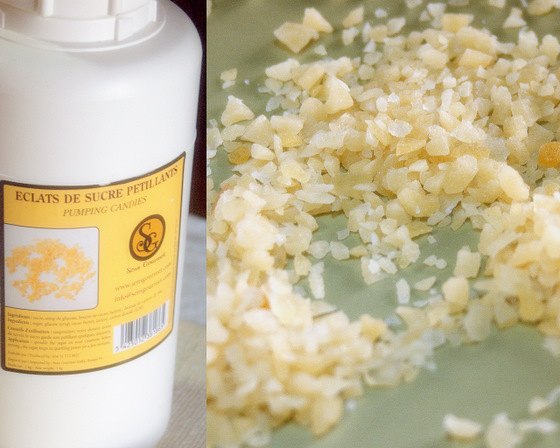
…exploding sugar crystals”..(pumping candies)…
The basic recipe for the crêpes can be found here: A classice crêpe recipe and feasting the Mardi Gras way.
Suggestions for Sophie’s Bretonne crêpes.
- When serving your crêpes, heat a pan with a small knob of butter.
- Add one crêpe at a time, turn and warm/fry the other side.
- Add a little sugar to the crêpe in the pan, allow it to melt, fold the crêpe in half and fold again so you end up with a small envelope.
- Slide onto a plate and serve hot.
- For fun I added some “exploding sugar crystals” just before serving. They will “explode” in your mouth, adding a surprise to each bite. I see they are called “pumping candies”…?Her is one address in France where they can be ordered from: Meilleur du chef.com
********************************************************************
When we hear the word château, we immediately dream up an image of Le Roi Louis XIV, the sun king of France. And yes, it is spot on. It is those beautiful country residences of royalties like le château de Versailles, or Fontainebleau, or those found in La vallee de la Loire, like the majestic Chambord and Chenenonceau, or Villandry and Uzé and others, more or less known.
…Fontainebleau…

…Chambord…

…Bourdaisiére…
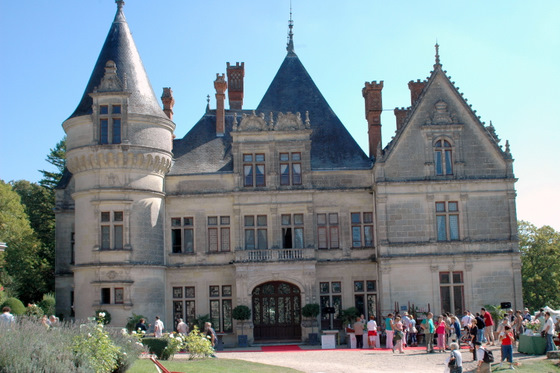
…Chinon…

…Chaumont sur Loire…
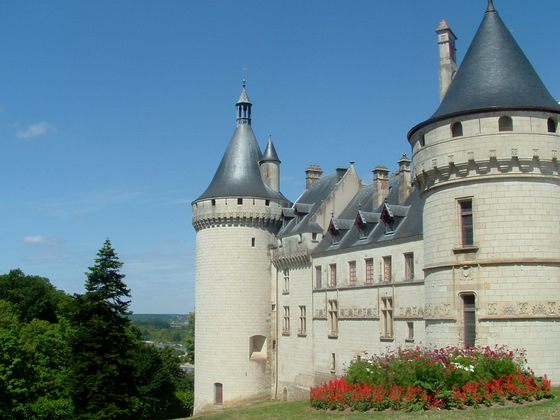
But then we also have the smaller French country house, also called un château which might be inhabited by a noble Frenchman or not. Lately many châteaux here in France are bought up and restored by foreigners and run as bed and breakfasts or luxury hotels. And yes, stories rich in deception, love and intrigue still abound in all these châteaux, even the luxury château hotels…how can you silence the voice of a place?
…a locked up country château…

.. you want to hear the mysterious story of this small château…no, not now? OK next time…
…no entry, only mystery…

There is a third kind of château…my chickens are of noble heritage…owing not only one, but two châteaux of which I am the butler and the maid and housekeeper. Their fancy heated one in Tours is at the moment up for sale, and they are living in an old dilapidated château here at Coin Perdu which we inherited when we bought the property. But, as royalty runs deep in the veins and isn’t determined by surroundings, my chickens reign with dignity and class from their ruins.
…the entrance to the chateau de Plumes…

…a dilapidated château de Plumes..
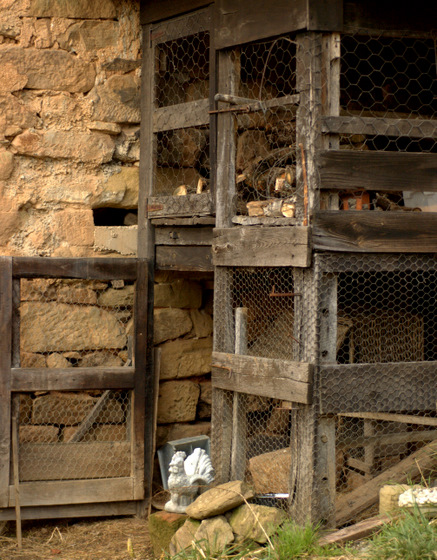
As soon as my vegetable patch is finished, the château de Plumes will move to the potager. I have the plans all set up for a cute and regal château de Plumes with turrets and all, still rustic, but worthy to be home to Their Royal Hignesses. As it is very cold here at night, I bring them into the barn at night, in their baskets, where they sleep next to my bed and we all snore in sync and cozy warmth. At 5:30, when Camembert announces the day(how does he know it is day, when all is still spitting dark??), I turn on my other side and cover my ears.
…dignified royalty…

Enjoy your ONE crêpe!!!
and until next time..
from your devoted servant, Ronelle