Petit pois dip with mint and goats cheese and garden stories.

It is time for nature. For long walks. For the garden. Double digging and planting. For pruning and sowing. And for observing. After a hard winter, nature is on the verge of exploding into its exuberant spring plumage. To harmonize with the new growth and hope springing up all around, I wanted something green. Petits pois came to mind with its vibrant green .   I call it a dip, but it is a spread, a paté, a guacamole, a tapenade too… I added Maroccan mint, some freshly sprouted seeds, soft goats cheese; it is early spring on a bruschetta. Nothing more can be said.

  • In a next post, we’ll talk a little about sprouting seeds, which is something we all should be doing at our homes!

Suggestions:

  • Instead of serving the dip on bread, it can be served in individual small glasses or bowls and eaten with a spoon as a starter and some bread on the side.
  • Or serve as a little salad on a bed of young spinach leaves.
  • Add some dried currants for a little sweetness.
  • Use other vegetables like fava beans or a mixture of the two.
  • Consider also crushed steamed broccoli or steamed courgettes.
  • Don’t skimp on the mint.
  • Some mayonnaise or cream can be added to the mixture to give it more of a dip texture. Serve with carrot and celery sticks.
  • Serve with toasted bread slices or fresh crusty baguette slices.


Let’s put winter with its deep conversation and full bodied Cabernets and hypnotic fireplaces behind for a while. Let’s move outside to the stories of nature. To the optimistic nesting of the gulls on the Loire islands. To the plunging flights of the swallows. The fearless circling of the eagles. Let’s focus on the delicate entrance of the apple blossom.  The almond blossom. Let’s admire the elegance of the magnolia and not shy away from the shameless flirtation of the sweeping wildflowers.

From the beginning of time, man had been entranced by nature. Living by it, dying by it. Cursing by it, loving by it. We live by it force every day. 

…it is only when you start to garden, probably after 50 – that you realize something important happens every day – Geoffrey B Charlesworth…


I can’t pass by a book on garden stories.  Some day I’ll share one of my own stories from my garden journal. But for now, I’d like to share four of my favorite garden story books. (The lovely bookmarks you see in the following images, was a gift from  la belle Monique)

…A growing gardener by Abbie Zabar. Delightful sketches about her garden on the rooftop, with delightful  accompanying drawings, a feast for the eye and an enrichment for the soul!…

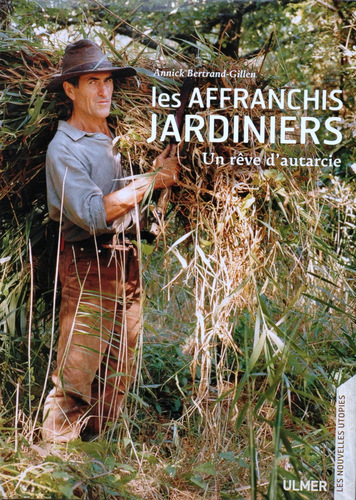
Les affranchis jardiniers by Annick BertrandGillen…..a couple living the simple  way, providing for themselves from nature, doing it all the biological way. I adore this book.We experience a bit of their life with them, their garden and home and it gives us envy to follow in their footsteps. A beautiful life. A beautiful garden, open to the public in summer….

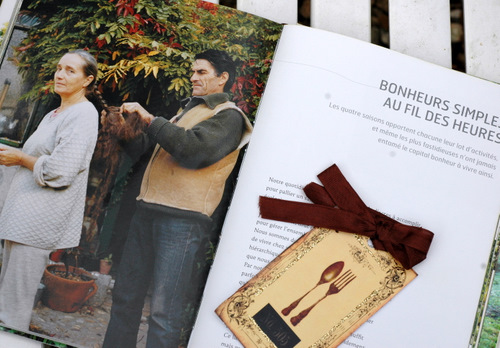
Simple pleasures of the garden by Susannah Seton…...a collection of stories and recipes, quotes and tips for every season. This is a book to be read outside in the shade of the walnut, or curled up by the fireplace, or in the splendor of autumn by the riverside, it makes you love every season.

True nature by Barbara Bash…..a writer/illustrator taking solitary retreats, living close to nature with only her thoughts and art and her journal. I received this as a gift from a good friend an fellow artist, the very creative Lindsay who sent it to me when I was not in the best of places. It was wonderful food for my thoughts then and still is!

… welcoming spring…

And last but not least…have a spring inspired look at Jain’s day inthe country!

Don’t throw outt the water you’ve used to boil your eggs in. They are rich in mineral salts…use it to water your plants with.
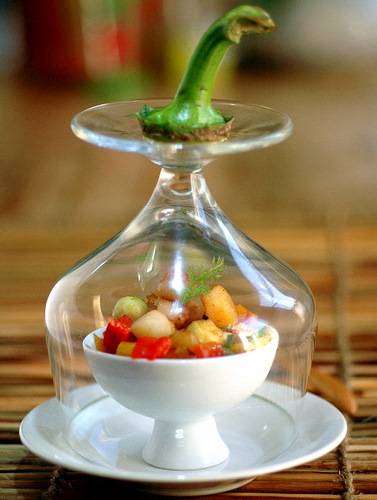
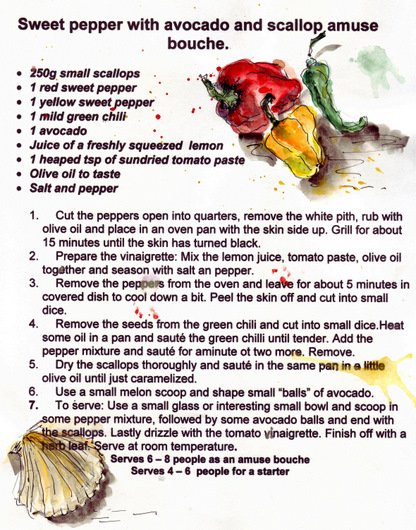
Sweet pepper and scallop amuse bouche and cloches(bells).

Sometimes things can be so beautiful, they become without purpose.  Their beauty makes them too fragile, too precious. Think of a Fabergé egg. Beautiful, obscenely expensive and without any purpose. Empty…. Oïe..I’m busy shooting myself in the foot here…being an aritist and optimistically hoping my art would be “beautiful” enough to offer nothing else but the sole purpose of bringing pleasure to the world…!

Suggestions:

  • Use a green sweet pepper instead of the green chili for a milder taste, or use strondger chilis for more bite.
  • Peeled tomato can be added.
  • Replace the scallops with mussels or shrimp for variety.
  • To eat as a starter, use the bigger bay scallops.
  • Dry the scallops thoroughly and sauté very quick over high heat to prevent them from becoming rubbery.
  • the preparations can be done earlier and kept covered and cool until just before serving.
  • Assemble just before serving and serve  at room temperature or slightly warmer if preferred.
  • Finish off with dry raosted nuts or seeds like sunflower or pine nuts or pistachios.

Cloches(bells) don’t fall in this aesthetically pleasing but useless category. They are gorgeous in their appearance as well as in their use. They can bring an enchantment to a simple corner, and they add the same magic to a dinner table. Food under a cloche draws you in, makes you bend down and peek closer, stare around and beyond the reflections, wondering about the smell and taste, wanting to touch what is inside the glass cage.

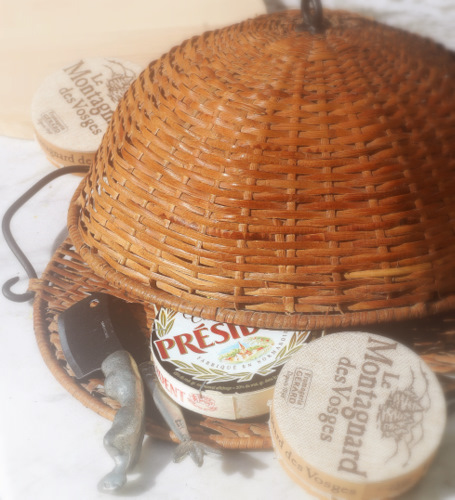
Showing up in trendy styles ands shapes , we can have our cloches throughout the year. In spring, while taking a break from planting herbs, we can unveil an array of cheese and charcuterie(cold meats) olives, tomatoes, whatever you feel like, and sit out, seeking out the shy sun.

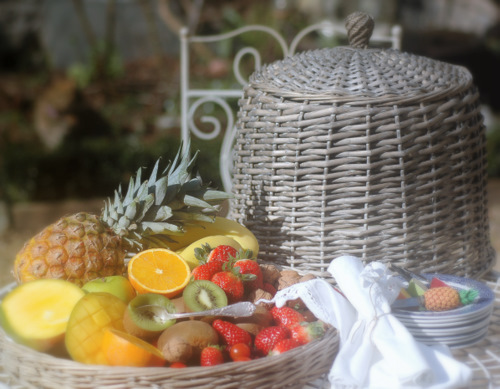
Or maybe on a summers day, stretch out in the shade of the old oak tree, hiding from the mischievous sun and indulge in what hides under a  rattan cloche; fruit, juices, a sorbet… And winters find our cloches surrounded by romantic candlelight..

In the garden, cloches have been around forever. They bestow the garden with interest and old worlde  charm while at the same time fulfilling its obligation in protecting young seedlings from the elements.

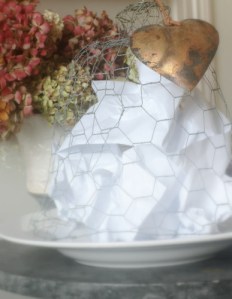
Small cloches for small still lives in small corners, not forgetting a wire cloche, which can travel from the kitchen to the sitting room to the garden.

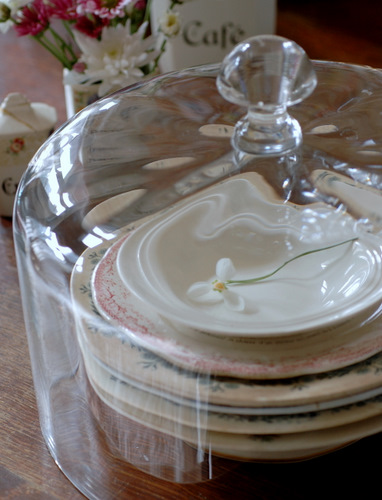
A cake cloche, awaiting a platter of  sweetness accompanying teatime, a gouter, as we so aptly call it in french, but in the meantime it is showing off its company of old plates on an old dresser. Hopefully, the gouter might find its place on the weekend…

Use small cloches to serve an amuse bouche at the dinner table, all ready and greeting your guests as they arrive at the table. It is something I always do. A small amuse bouche on each plate. When the guests seat themselves, their eyes are fixed on the little “gift” in front of them. It heightens the expectation and  starts off the dinner on an exciting note.

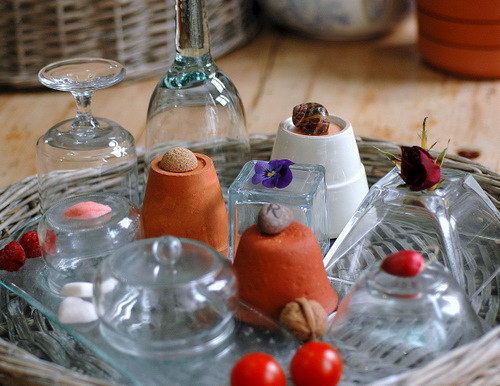
You don’t need expensive or antique silver cloches to bring a note of style and festivity to your table. Just by looking around your house, you will find many things which can serve as a little cloche.

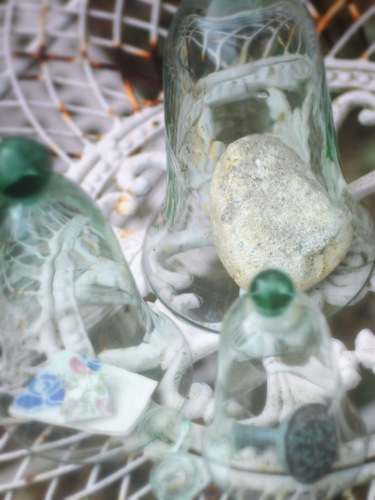
Little glass bowls, fish bowls, empty yoghurt glass container, wide rimmed glasses turned upside down, flower pots, vases, candle holders… turn them upside down and place a fake “knob” on the top, using a cherry tomato, nuts, fave bean, broccoli flower, radish, crab apple, strawberry, flowers, empty snail shells, sea shells, decorative sugars, sugar cubes, pebbles(with each guest’s name on), steal your son’s marbles for the day… Play around with some self made cloches and bring a bit of fun and tongue-in-cheek elegance to your table!

To clean your inside plant leaves, especially the smooth and shiny ones which accumulate dust and grime  easily, use a cloth soaked in beer  to give them shine.